


The effectiveness of telerehabilitation in people diagnosed with systemic sclerosis: a feasibility study
A. Boffelli,1 T. Nava,2 A. Tassoni3 | 1School of Physiotherapy, University of Brescia; 2School of Physiotherapy, University of Milan; 3University of Brescia, Italy
All claims expressed in this article are solely those of the authors and do not necessarily represent those of their affiliated organizations, or those of the publisher, the editors and the reviewers. Any product that may be evaluated in this article or claim that may be made by its manufacturer is not guaranteed or endorsed by the publisher.
Authors
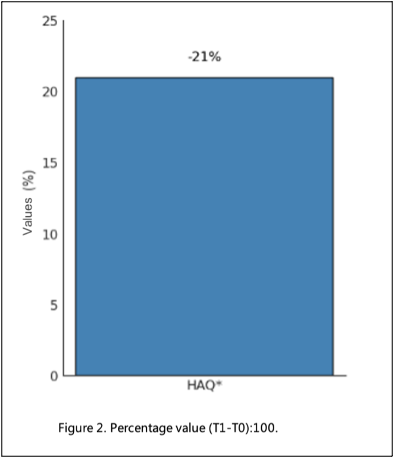
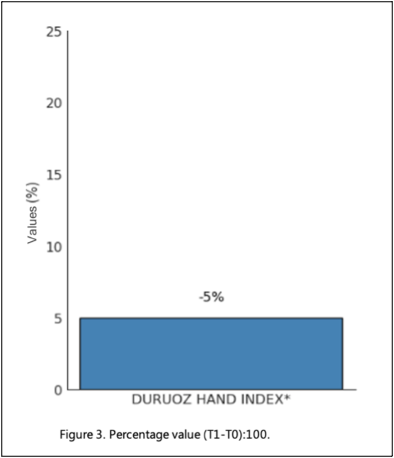
Systemic sclerosis (SSc) is a rare autoimmune disease.1 Telerehabilitation may represent a valid non-pharmacological intervention.2-5 The aim of the study is to evaluate the effectiveness of a telerehabilitation program in patients with SSc. Fifteen patients participated in a telerehabilitation program with a physiotherapist, including joint and soft tissue mobilization and educational sessions. Outcomes were assessed pre- (T0) and post-intervention (T1) using interincisal distance, the Health Assessment Questionnaire (HAQ), the Duruöz Hand Index, the Fatigue Assessment Scale (FAS), and pain and fatigue intensity (VAS). At T1, interincisal distance significantly improved (T0: 29.47±1.79 vs. T1: 33.2±1.60; p=0.003). Reductions were observed in HAQ (−21.1%), hand disability (−5%), fatigue (−5%) and pain (−4.8%), with a slight increase in mental fatigue (+4.2%). Telerehabilitation showed positive effects on functional outcomes in patients with SSc, supporting its role as an adjunct to conventional rehabilitation.

Downloads
Citations
How to Cite

This work is licensed under a Creative Commons Attribution-NonCommercial 4.0 International License.